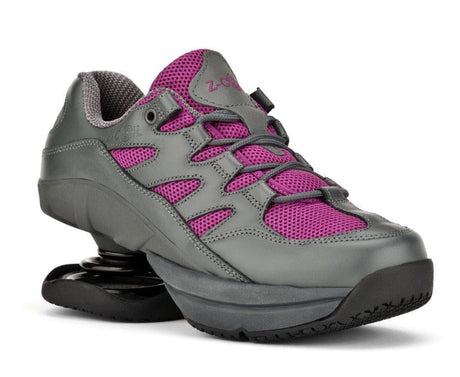
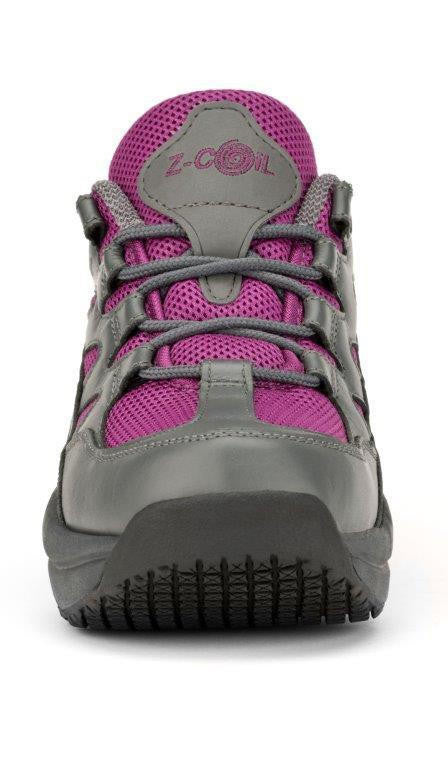
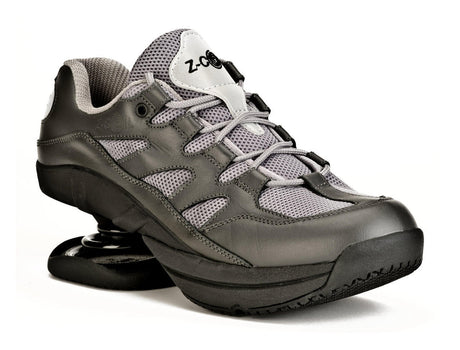
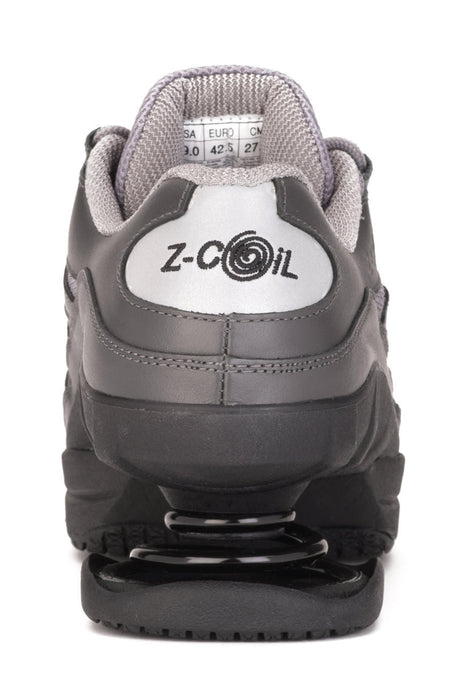
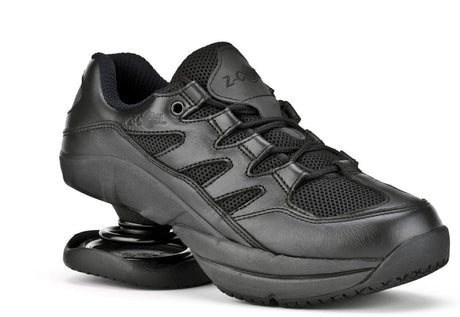
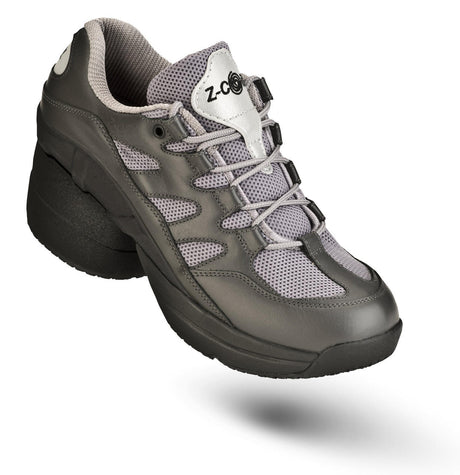
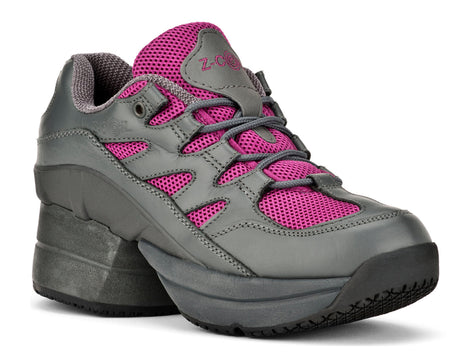
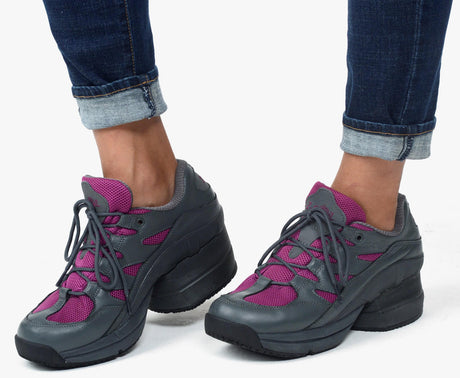
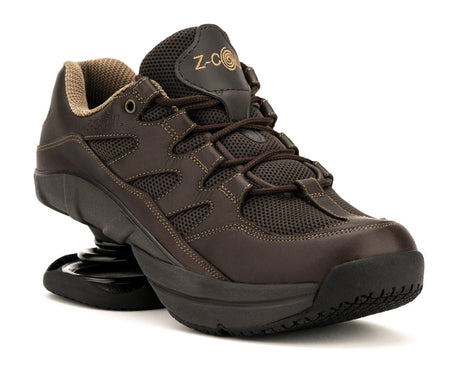
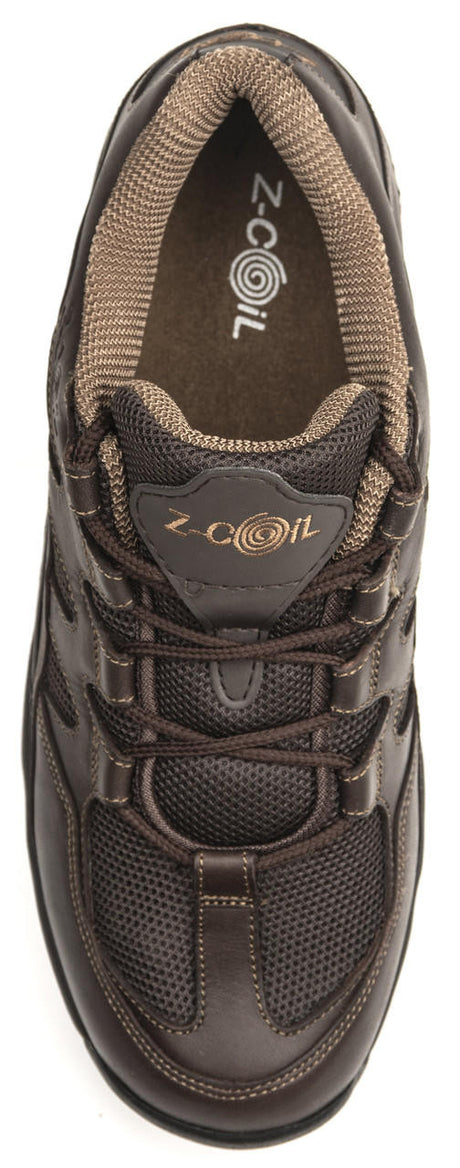
The short answer: The best shoes for standing on concrete all day keep absorbing impact at hour ten the way they did at hour one, support your arch, give your toes room to spread and grip the floor. Foam cushioning packs down over a shift and over months. A steel spring heel compresses and rebounds on every step instead.
Key takeaways
- Concrete has no give. Your shoes have to do all of the shock absorbing.
- Look for lasting impact reduction, built-in arch support, a rocker forefoot, a wide toe box and a slip-resistant outsole.
- Foam feels soft at first and flattens with use. Steel doesn't pack down like foam.
- Test any new pair over real shifts, not a lap around the store.
Why is standing on concrete so hard on your body?
Concrete is one of the hardest surfaces you can work on. It doesn't flex, so every step sends force back up through your heels, knees, hips and lower back. Standing still is hard too: your feet carry your full weight for hours with no break.
If you have foot, heel or back pain that keeps coming back, see a podiatrist or your doctor. The American Podiatric Medical Association has a find-a-podiatrist tool. Shoes aren't a treatment, but the right pair can make a long day on concrete feel a lot less punishing.
What should you look for in shoes for standing on concrete?
1. Impact reduction that lasts all shift
Most comfort shoes use foam. It feels great in the first hour, then compresses under your weight. Look for shoes that keep absorbing impact late in the day.
2. Arch support built in
Firm, built-in arch support spreads pressure across the bottom of your foot during long stretches of standing.
3. A rocker forefoot
A rocker sole rolls you forward so the ball of your foot bends less on every step.
4. A wide toe box
Feet swell over a long day. A wide toe box gives your toes room so the ball of your foot isn't squeezed.
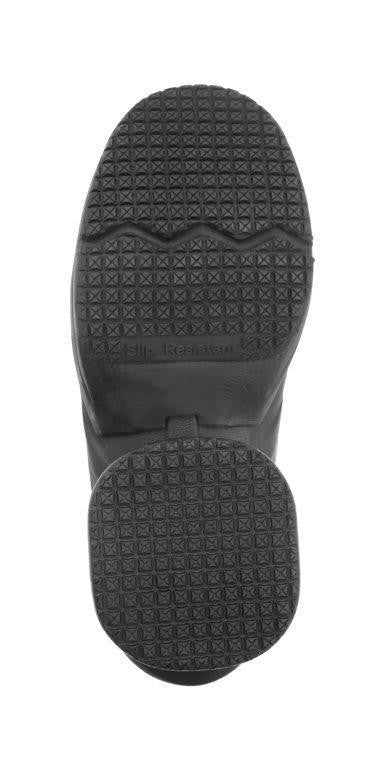
5. A slip-resistant outsole
Kitchens, warehouses, hospitals and shop floors get wet. Choose slip-resistant soles if your floor does.
6. Safety toe, if your job needs one
Warehouse and industrial jobs often require protective toes. Check your employer's rule before you buy.
Steel spring vs foam: what's the difference?
| Steel spring heel (Z-CoiL) | Foam cushioning | |
|---|---|---|
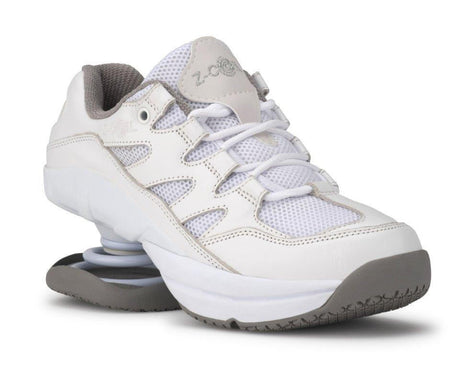
| How it absorbs impact | A steel coil compresses when your heel lands, then rebounds | Foam compresses under your weight |
| Energy return | Returns about 40% of your energy | Varies by foam |
| Over a long shift | Rebounds on every step | Compresses as the day goes on |
| Over months | Steel doesn't pack down like foam; coils are replaceable | Packs down; the shoe gets replaced |
| Lab testing | Sandia National Laboratories measured 13% lower peak impact walking and 17% jogging in properly fitted pairs | Depends on the shoe |
Our picks for standing on concrete all day
Freedom Classic Black: our best seller

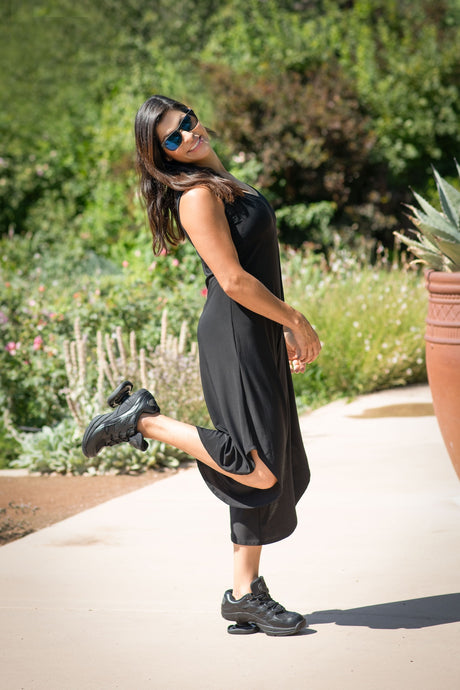
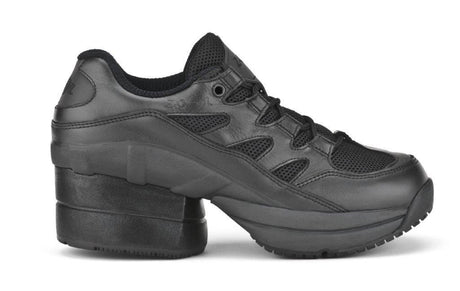
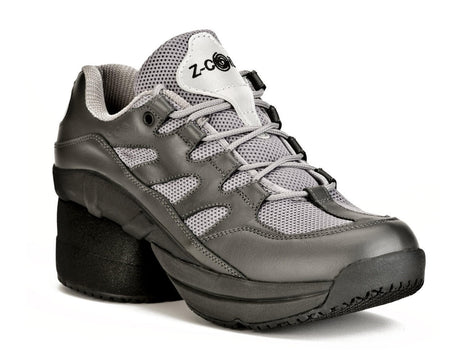
An all-black sneaker with the steel spring heel, built-in Z-Orthotic, rocker forefoot and wide toe box. Good for retail, teaching, healthcare and anyone on their feet all day. See the Freedom Classic Black.
Legend Black Slip Resistant: for wet floors and strict dress codes

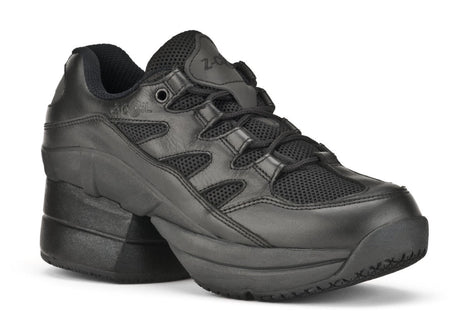
Closed toe, closed heel, full-grain leather that wipes clean and a slip-resistant outsole. Built for kitchens, hospitals and food service. See the Legend Black Slip Resistant.
Prime Work Boot, Safety Toe: for warehouse and industrial floors

A work boot with an ASTM F2413 composite toe and the same steel spring heel. See the Prime Work Boot, Safety Toe or shop all work boots.
Taos Clog: if your workplace allows slip-ons

The spring heel in an easy on, easy off clog. See the Taos Clog.
Small habits that help on concrete
- Shift your weight and move when you can. Standing perfectly still is harder than walking.
- Use an anti-fatigue mat at a fixed station if your employer allows it.
- Rotate two pairs so each one dries out between shifts.
- Replace worn parts. On a Z-CoiL, the coils and insoles are replaceable.
- Check your old soles. Shoe wear patterns tell you a lot about your stride.
Paying for work shoes
Z-CoiL footwear is HSA/FSA eligible through Truemed at checkout. See how HSA/FSA works.
Try them on your own floor
Try them for 30 days. If they're not right for you, send them back in any condition for a full refund. More on work floors: shoes for concrete floors, nursing shoes and best shoes for nurses.
FAQ
What kind of shoes are best for standing on concrete all day?
Shoes with lasting heel impact reduction, built-in arch support, a rocker forefoot, a wide toe box and a slip-resistant outsole. A steel spring heel keeps absorbing impact because steel doesn't pack down like foam.
Are cushioned shoes or supportive shoes better for concrete?
You want both. Cushioning or a spring absorbs impact, and firm arch support keeps pressure spread across your foot during long hours of standing.
How often should I replace shoes I stand in all day?
Replace them when the tread is smooth, the heel leans or the cushioning stays flat. On a Z-CoiL, you can replace the coils and insoles to refresh the shoe.
Are Z-CoiL shoes waterproof?
Z-CoiL shoes are water resistant, not waterproof.