Shoes for Heel Pain: What to Look For If You Have Plantar Fasciitis
The short answer: if your heel hurts, look for a shoe that does five things: absorbs impact at the heel, gives firm arch support that doesn't flatten, cups the heel, rolls you smoothly from heel to toe and leaves room for your toes. Footwear is one part of the picture alongside stretching and a podiatrist's advice, but it's the part you live in all day.

What Is Plantar Fasciitis?
The plantar fascia is a thick band of tissue that runs along the bottom of the foot from the heel bone to the toes and helps hold up the arch. When it's irritated or inflamed, the usual sign is a sharp pain in the heel, often worst with the first steps in the morning or after sitting for a while. If heel pain lasts more than a couple of weeks, see a podiatrist or physician for a diagnosis.
Why Your Shoes Matter
Every step sends force into the heel and along the plantar fascia. People who stand or walk on hard floors for a living, like nurses, teachers, retail and warehouse workers, take thousands of those steps a day. A shoe can't change your foot, but it can change how much impact reaches it and how well the arch is supported while you work.
5 Features to Look For
1. Impact absorption at the heel
The heel takes the first hit on every step, so that's where absorption matters most. Foam works at first but compresses over time. Mechanical systems hold up longer.
2. Firm, structured arch support
A soft insert can feel good in the store and flatten within weeks. Look for a rigid, contoured arch that keeps its shape under your full weight.
3. A deep heel cup
A rounded heel cup keeps the heel's natural fat pad underneath you and spreads pressure across the whole heel.
4. A rocker sole
A rocker bottom helps the foot roll from heel to toe, so less bending and pushing happens at the forefoot.
5. A wide toe box
Room for your toes to spread keeps you from shifting your weight to compensate for a cramped forefoot.
How Z-CoiL Covers All Five
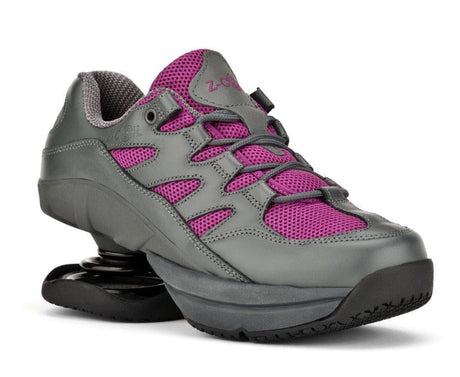
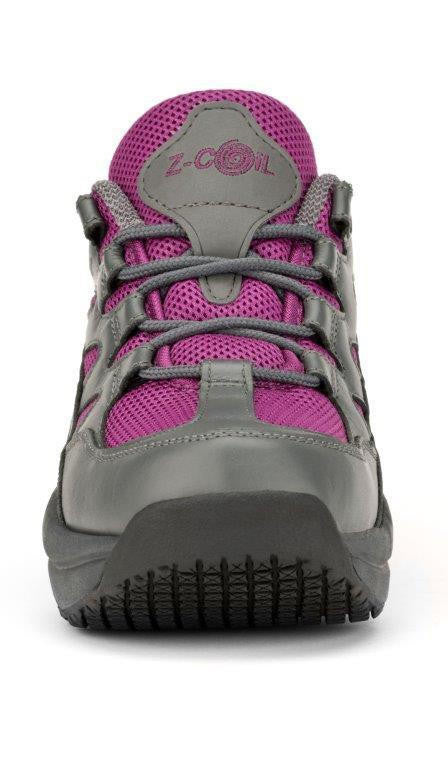
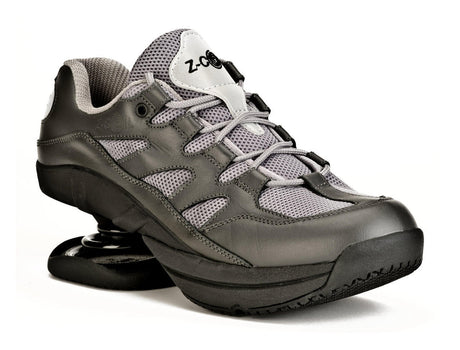
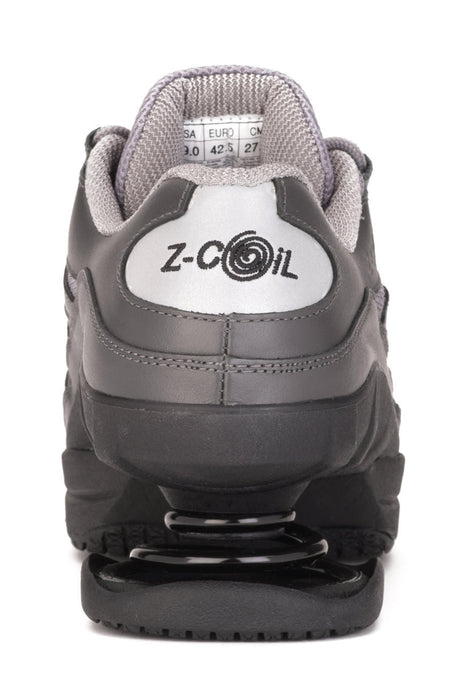
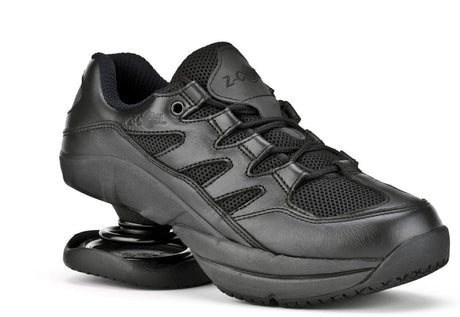
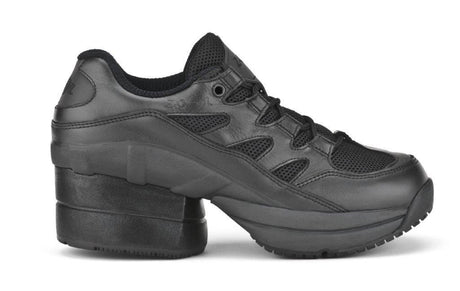
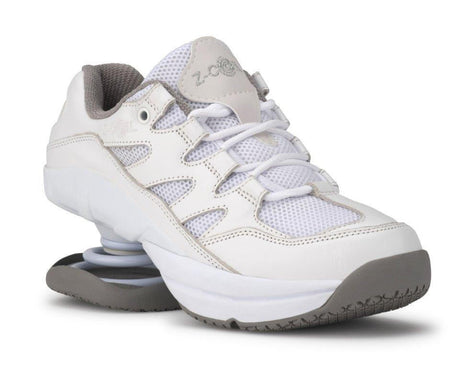
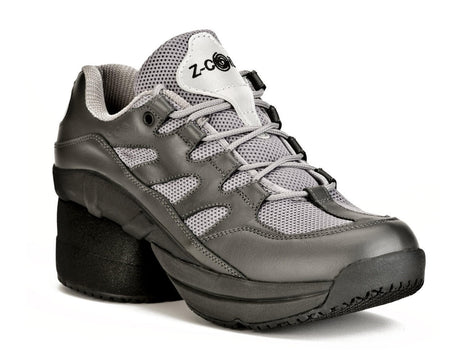
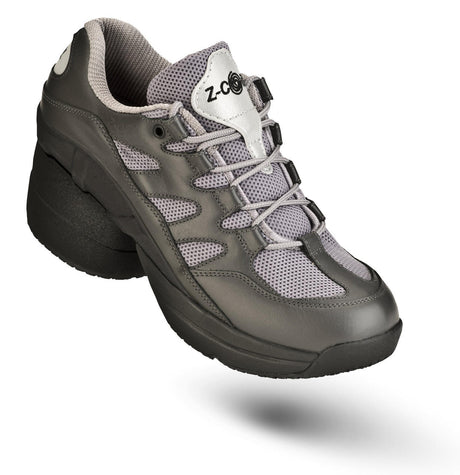
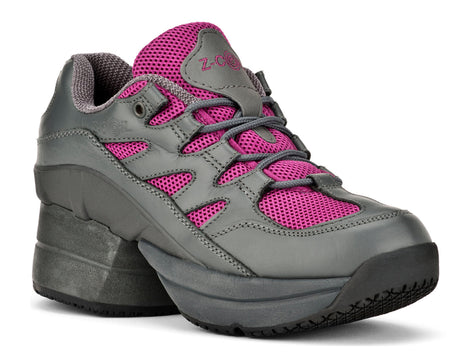
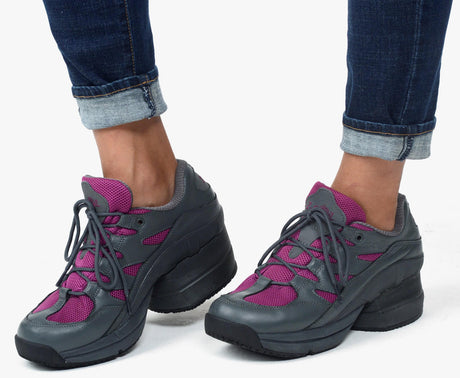
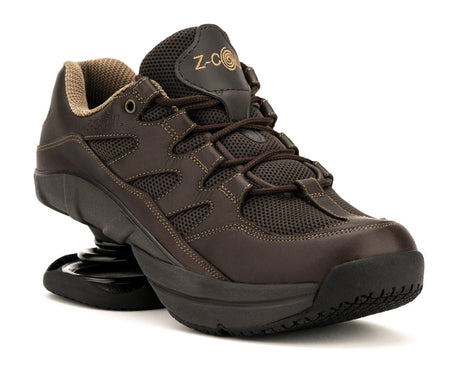
Z-CoiL builds every shoe around a patented steel spring under the heel. The coil compresses up to 27mm when your heel lands and rebounds as you roll forward, which reduces impact compared with conventional footwear and returns about 40% of your energy. Each shoe also has a built-in rigid Z-Orthotic® with a raised arch and rounded heel cup, a rocker sole, 19mm of forefoot cushioning and a naturally wide toe box. Steel doesn't pack down like foam, and coils and insoles are replaceable. See how the spring heel works.
For styles picked for heel pain and plantar fasciitis, see our shoes for plantar fasciitis page.

A popular place to start: the Freedom Classic
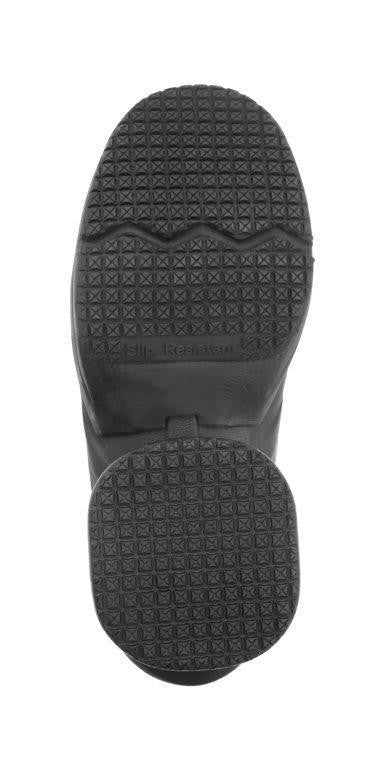
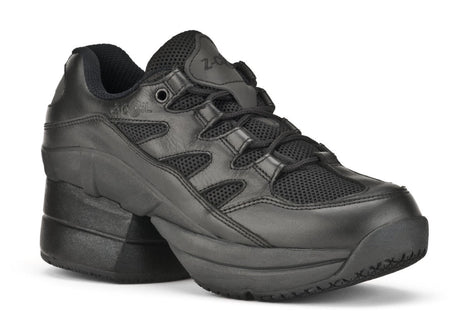
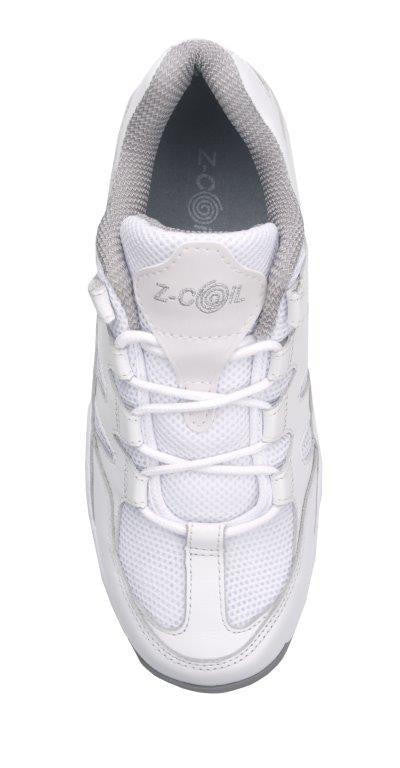
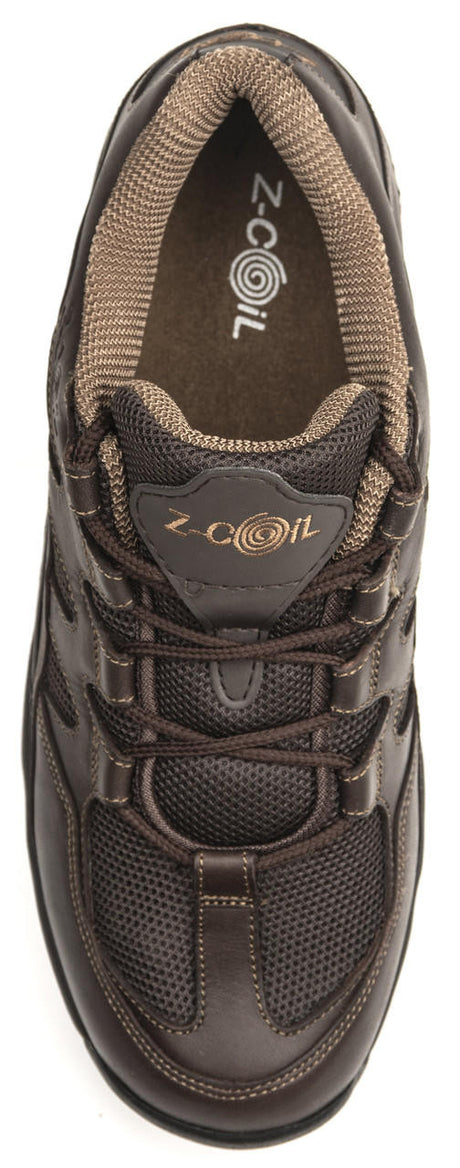
The Freedom Classic is our best-known everyday shoe: steel spring heel, built-in orthotic, wide toe box, thick forefoot cushioning, breathable mesh upper and a slip-resistant outsole.
Other Habits That Help
- Stretch your calves and the bottom of your feet daily.
- Avoid walking barefoot on hard floors.
- Build up activity gradually after time off your feet.
- Follow the plan your podiatrist or physical therapist gives you.
On your feet all shift? Our guide to the best shoes for nurses covers healthcare-specific needs.
Try Them for 30 Days
Try them for 30 days. If they're not right for you, send them back in any condition for a full refund. See the 30-day trial. Z-CoiL is HSA/FSA eligible through Truemed.
Frequently Asked Questions
What kind of shoe is best for heel pain?
Look for strong impact absorption at the heel, firm arch support that doesn't flatten, a deep heel cup, a rocker sole and a wide toe box. Soft foam alone tends to compress over time.
Is a spring heel shoe good for plantar fasciitis?
A spring heel addresses the first feature on the list: impact at the heel. Z-CoiL's steel coil reduces impact compared with conventional footwear and returns about 40% of your energy, while its built-in orthotic supports the arch. Footwear works best alongside the care plan from your podiatrist or physician.
Should I wear shoes with arch support at home?
Many people with heel pain find that walking barefoot on hard floors makes it worse. A supportive shoe or house shoe keeps support under the arch indoors too.
Can I use my own orthotics in Z-CoiL shoes?
Every Z-CoiL already has a rigid orthotic built in, so most people don't need an extra insert. If you've been prescribed a custom orthotic, call us at 800.268.6239 and we'll help with fit.
Are only the coils replaceable?
Coils and insoles are replaceable, so you can refresh the parts that take the most wear without buying a new pair.