By Lindley Gallegos Bach, President, Z-CoiL Footwear (third generation). Updated October 2026.
The short answer
- Shoes don't cure sciatica, but they change how much impact travels up through your knees, hips, and lower back with every step.
- The best shoes for sciatica do three things: reduce heel impact, support the arch so your body stays aligned, and help you roll forward smoothly.
- Four common mistakes make sciatica feel worse: high heels, flip-flops and other flat, unsupportive shoes, worn-out shoes, and relying on foam cushioning that has already packed down.
- If your pain is severe, getting worse, or comes with numbness or weakness, see a doctor before you change anything else.
What sciatica is, in plain terms
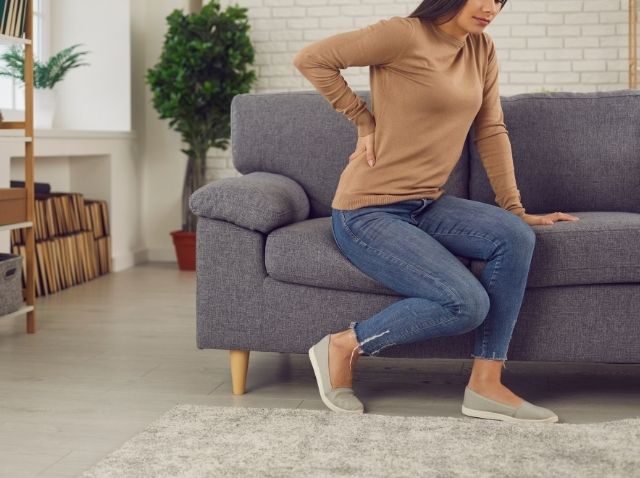
Sciatica is pain that follows the sciatic nerve, the largest nerve in the body. It runs from the lower spine through the hips and buttocks and down each leg. When something irritates or compresses it, you can feel sharp, burning, or radiating pain from the lower back down one leg, sometimes with tingling, numbness, or weakness.
Common causes include a herniated disc, spinal stenosis (narrowing of the spinal canal), degenerative disc changes, and piriformis syndrome, where a tight muscle in the buttock irritates the nerve. A doctor or physical therapist can tell you which one is behind your pain, and that matters for treatment.
Why your shoes matter
Every time your heel hits the ground, a jolt travels up the chain: foot, ankle, knee, hip, then lower back. On hard floors, that happens thousands of times a day. For many people with sciatica, standing and walking are when it hurts most.
Shoes can't take the pressure off a disc. What they can do is change how much of that jolt reaches your back, how stable your foot is, and how smoothly you move. That's why footwear shows up next to stretching, core strength, and posture in most advice about living with sciatica.
What to look for in shoes for sciatica
1. Impact reduction that lasts
Look for a shoe that reduces impact at the heel and keeps doing it all day. Most shoes use foam. Foam feels soft at first, then it compresses under load during the day and packs down over months.
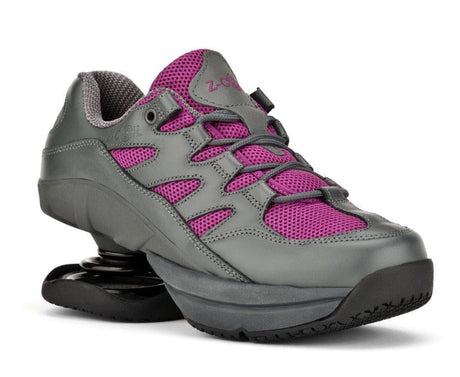
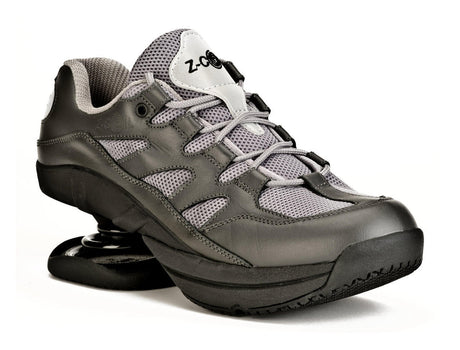
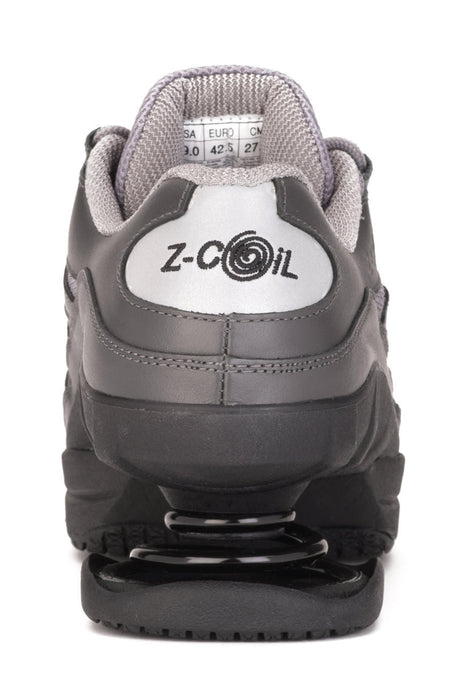
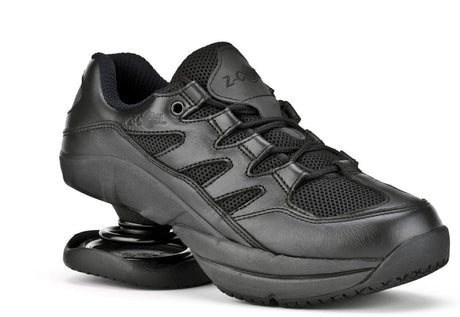
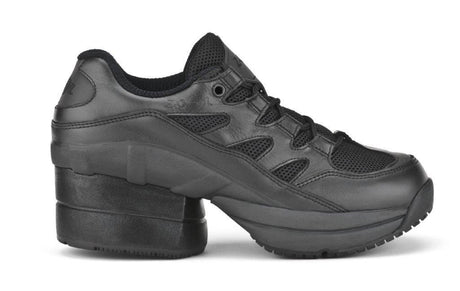
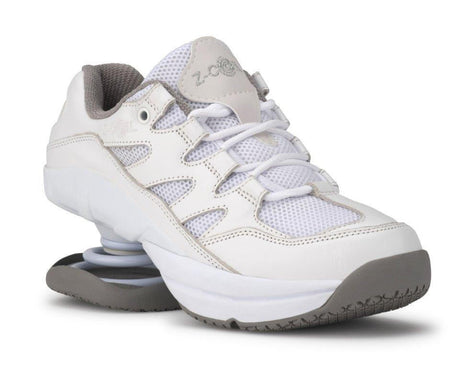
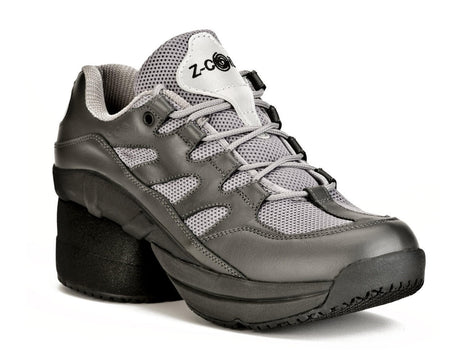
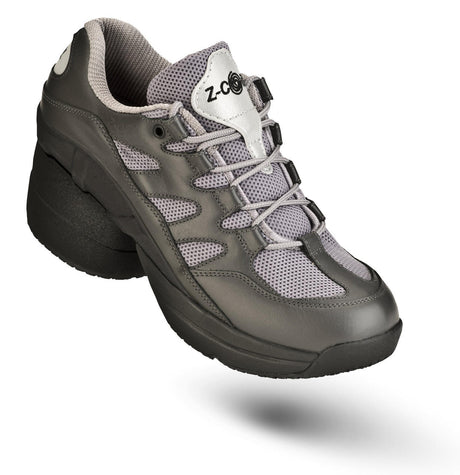
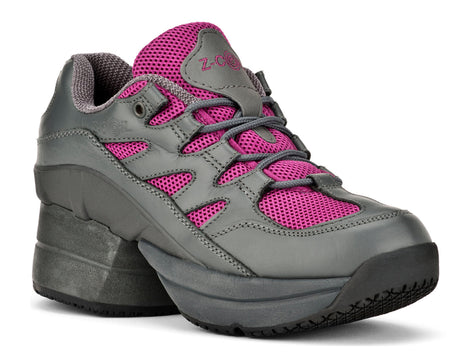
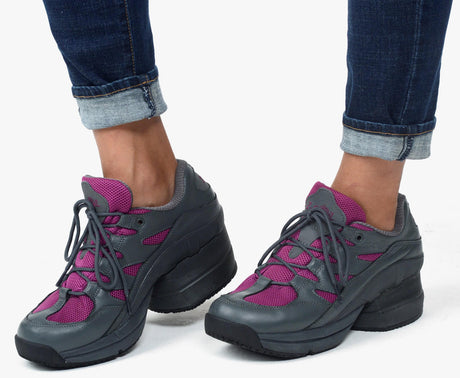
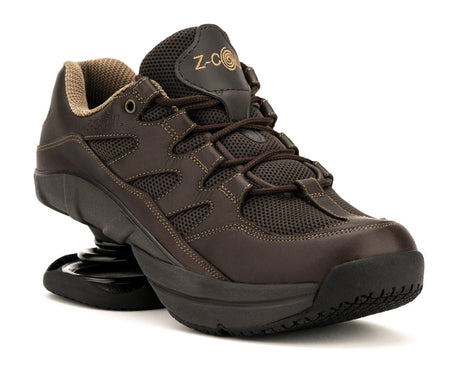
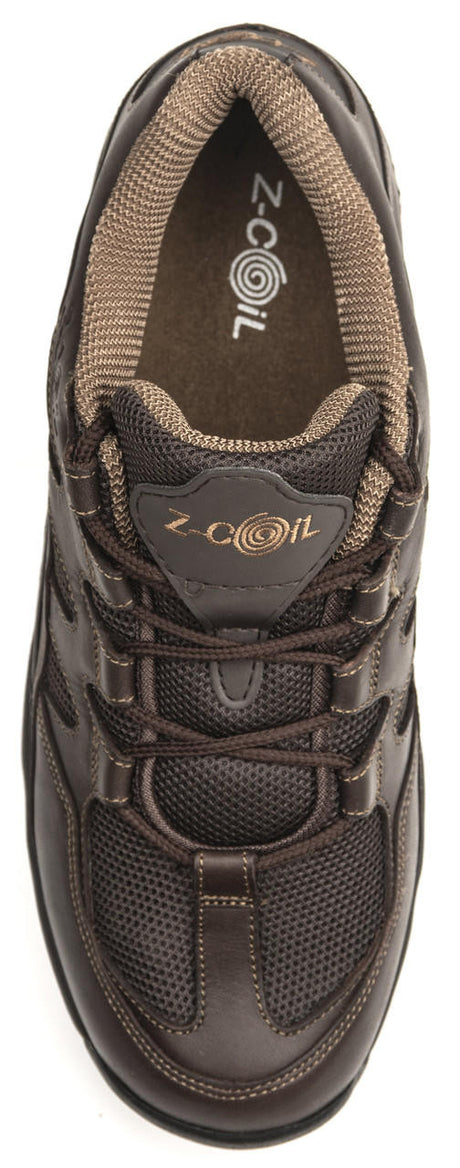
Every Z-CoiL has a chrome-plated steel spring under the heel. It compresses when your heel lands, then rebounds as you roll forward. Testing at Sandia National Laboratories found lower peak impact, and the coil returns about 40% of your energy. Steel doesn't pack down like foam. See how the spring heel works.
2. Firm arch support
When your arch collapses with each step, your knees and hips rotate to compensate, and that strain can reach your lower back. A firm orthotic keeps your foot stable underneath you. Every Z-CoiL has a built-in Z-Orthotic®, and the insole is removable if you wear a custom orthotic.
3. A smooth, rolling stride
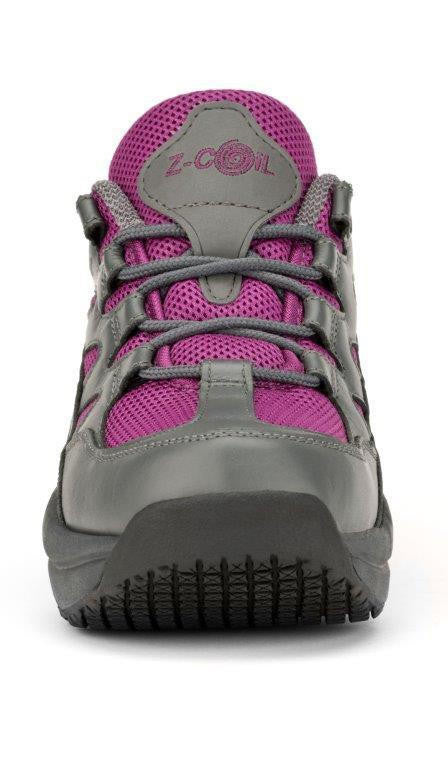
A rocker-bottom forefoot helps your foot roll through each step instead of slapping and bending hard at the toes. That means less jarring motion through the body. Every Z-CoiL has a rocker forefoot with nearly an inch of cushioning under the ball of the foot.
4. Stability and a secure heel
Your heel should sit centered and stay put. Shoes that let your foot slide around make your body work harder to stay balanced.
5. Room for your toes
A wide toe box lets your foot spread naturally, which helps balance and keeps you from shifting your weight to avoid pressure points.
4 footwear mistakes that can make sciatica feel worse
Wearing high heels
High heels tip your body forward. To stay upright, your lower back arches more, which loads the area where the sciatic nerve starts. They also put more pressure on the ball of the foot and give you very little arch support. If you need a dressier option, look for a low, wide heel with a supportive footbed.
Wearing flip-flops and flat, unsupportive shoes
Flip-flops and thin, flat shoes have almost no arch support and no impact reduction. Your toes grip to keep them on, your arch flattens, and every step on concrete goes straight up your legs. Save them for the pool deck.
Wearing shoes past their prime
We all have a favorite pair we hang on to. But once the heel leans, the tread is smooth, or the cushioning stays flat, the shoe isn't supporting you anymore. Your shoe wear patterns can show when it's time. On a Z-CoiL, the coils and insoles are replaceable, so you can refresh the shoe instead of replacing it.
Counting on soft cushioning alone
Soft feels good in the store. But foam that's soft on day one is often flat by month three, and soft without support lets your foot roll and wobble. Look for impact reduction that doesn't wear down, paired with firm support.
Women and sciatica: what to consider
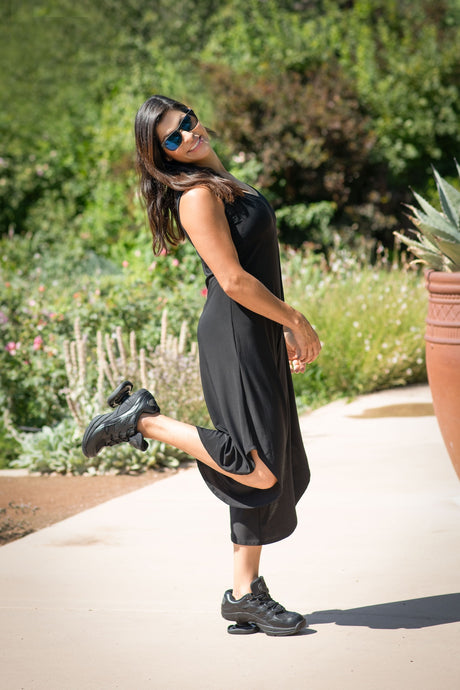
Many of our customers with sciatica are women who stand and walk for a living, especially in healthcare, retail, and teaching. A few things come up again and again:
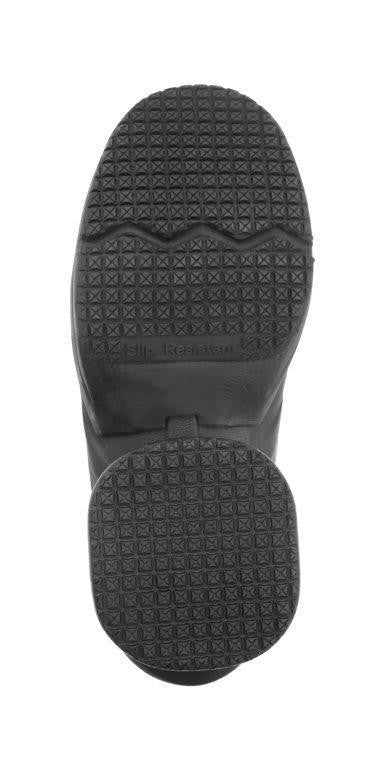
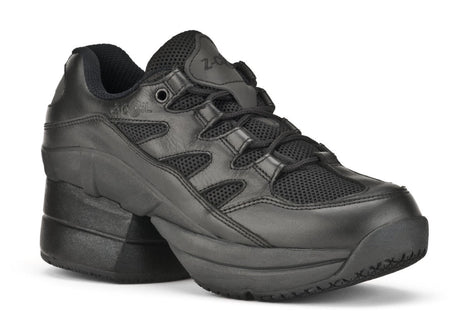
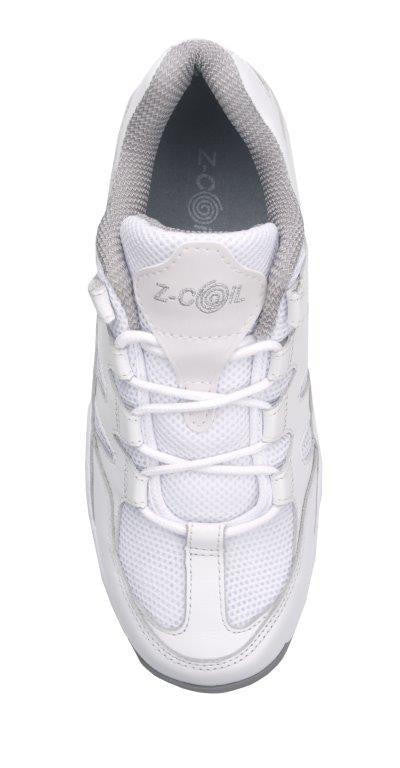
- Work dress codes. Many hospitals require a closed toe and heel. Our Freedom Classic and Legend Black Slip Resistant are closed-toe, closed-heel, and slip resistant. See our guide to the best shoes for nurses.
- Swelling over a long shift. A wide toe box leaves room for compression socks and feet that swell by the afternoon.
- Something other than a sneaker. If your workplace allows slip-ons, the Taos Clog gives you the same spring heel in a clog.
Browse women's styles or see all shoes for sciatica.
Other habits that help
Footwear works best alongside other habits. Many people with sciatica find these help:
- Gentle stretching for the hamstrings, hips, and piriformis, as your provider recommends
- Core strengthening to support the lower back
- Breaking up long periods of sitting with short walks
- Standing on an anti-fatigue mat at work stations when you can
- Paying attention to posture when you lift
See a doctor if your pain is severe, keeps getting worse, or comes with numbness or weakness in your leg. Get emergency care right away if you lose bladder or bowel control.
Try them for a full month
A shoe that feels fine for ten minutes in a store can feel very different after a full day. Every Z-CoiL comes with a 30-day trial, so you can wear them to work and around the house. If they're not right for you, send them back in any condition for a full refund. Z-CoiL footwear is also HSA/FSA eligible through Truemed at checkout.
Shop shoes for sciatica or take the 60-second Shoe Finder.
FAQ
What kind of shoes are best for sciatica?
Shoes that reduce heel impact, give firm arch support, keep your heel stable, and help you roll forward smoothly. Avoid high heels, flip-flops, and worn-out shoes.
Can the wrong shoes cause sciatica?
Shoes aren't usually the root cause. Sciatica most often comes from something pressing on or irritating the nerve, like a herniated disc or spinal stenosis. But unsupportive shoes and repeated impact on hard floors can make symptoms feel worse when you stand and walk.
Are cushioned shoes good for sciatica?
Cushioning helps, but it isn't enough on its own. Foam compresses during the day and packs down over time, and soft shoes without support can let your foot roll. Look for impact reduction that lasts, paired with firm arch support.
Is walking good for sciatica?
For many people, gentle walking is part of staying active with sciatica, but check with your doctor or physical therapist about what's right for you. Supportive shoes that reduce impact can make walking more comfortable.
What shoes should I avoid with sciatica?
High heels, flip-flops, thin flat shoes with no arch support, and any pair that's worn out.